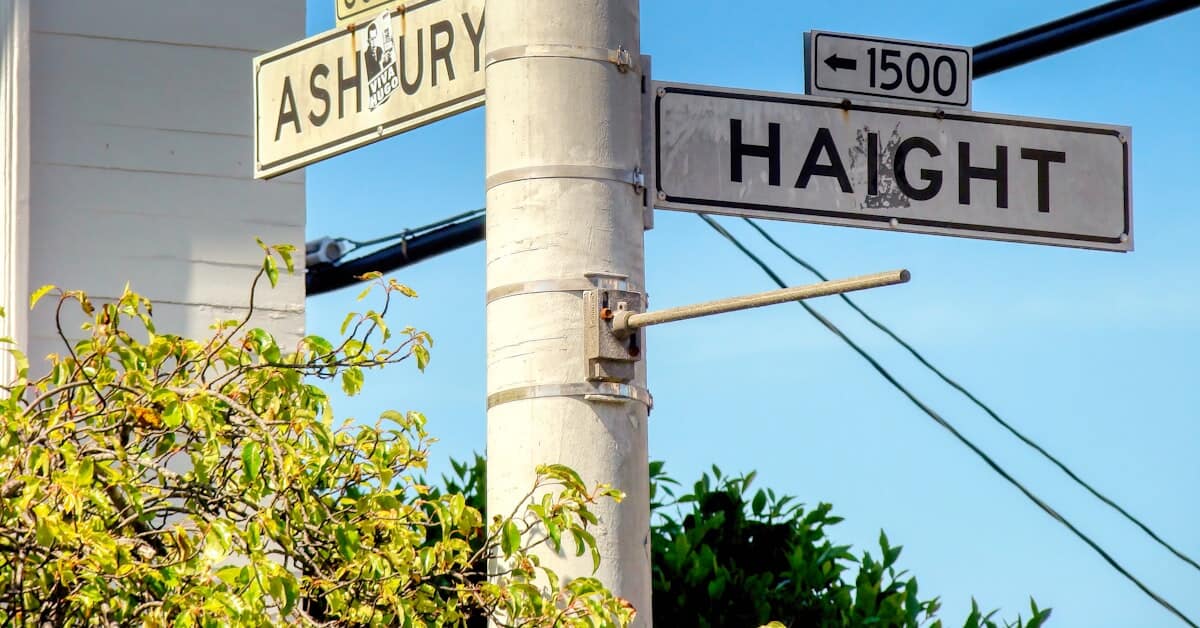
San Francisco cannabis history runs deeper and longer than most US cities — the Beat poets in North Beach were smoking on rooftops in 1955; the Haight was the global capital of counterculture by 1967; activists in the Castro and Mission turned the AIDS-era 1990s into the legal-cannabis movement that passed Prop 215 in 1996, the first medical-cannabis law in the United States. By the time California voters approved Prop 64 for adult-use in 2016, the playbook had been written here for thirty years.
This is the short, neighborhood-anchored version of that history — where it happened, who was there, and what it built. Skim the eras you care about; the dispensary scene we have today is the direct inheritor of all of it.
The Beat era (1950s): North Beach plants the seed
Cannabis didn't arrive in San Francisco with the hippies. By the early 1950s, the Beat poets had built North Beach into the West Coast's most influential bohemian neighborhood. City Lights Bookstore opened on Columbus Avenue in 1953. Cannabis circulated in the cafes around Caffe Trieste, in the basement bars on Broadway, and in the apartments off Grant Avenue. It was illegal under federal and state law, but it was embedded in the culture.
When Allen Ginsberg's Howl was put on trial in 1957 and won, the broader framework of free speech and counterculture got a legal foothold in San Francisco that no other US city had. That foothold mattered when the 1960s arrived.
Haight-Ashbury and the 1960s: SF cannabis culture goes national
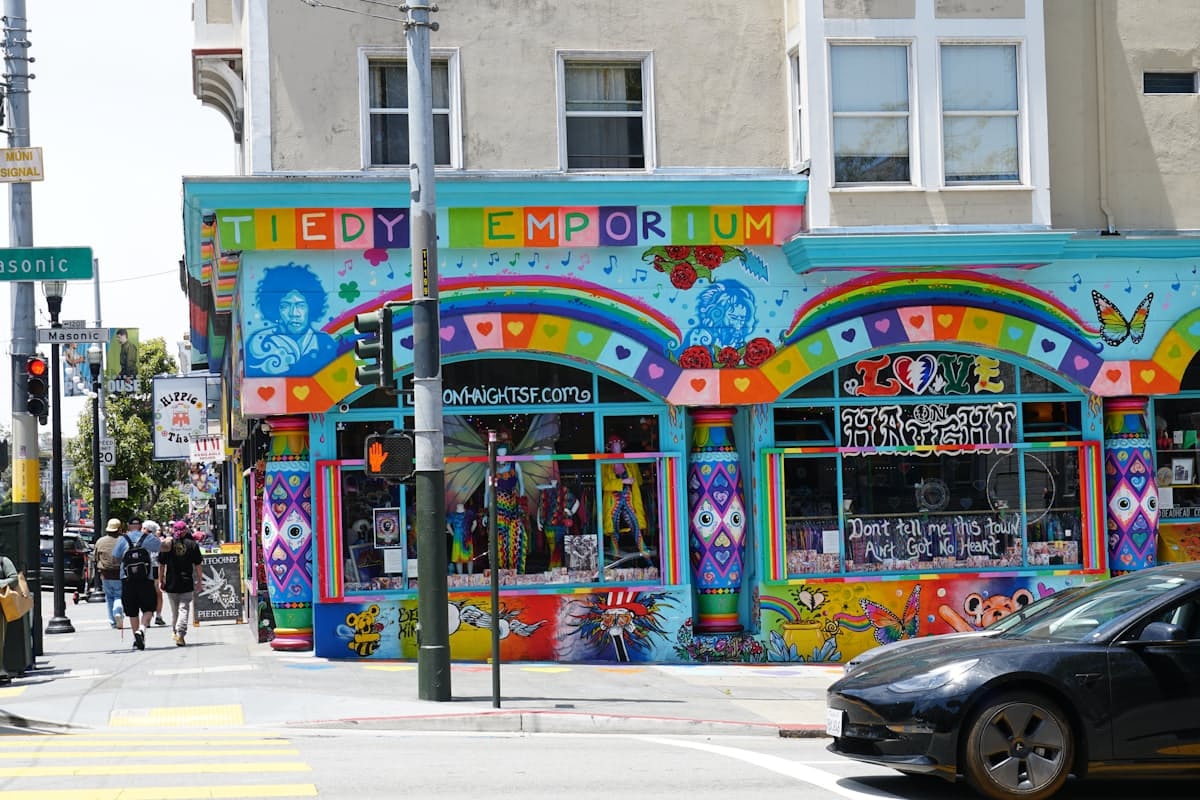
The Summer of Love in 1967 made the Haight-Ashbury neighborhood synonymous with American counterculture — and with cannabis. Roughly 100,000 young people streamed into a few square blocks around Haight and Ashbury Streets. The Grateful Dead lived at 710 Ashbury. Janis Joplin lived a few blocks away at 122 Lyon. Jefferson Airplane recorded at 2400 Fulton. The Diggers ran free clinics and free meals out of the Panhandle. Cannabis circulated openly enough that Hippie Hill in Golden Gate Park — the gentle slope inside the park's eastern edge, near the Stanyan Street entrance — became the de facto outdoor cannabis commons of the United States.
The 4/20 gathering at what's now Robin Williams Meadow grew out of that era and continues, in scaled-down form, today — see our Hippie Hill 4/20 guide for current-year status before you plan around it.
Federal pushback came in 1970 and 1971 with the Controlled Substances Act and Nixon's declaration of the War on Drugs. Cannabis was scheduled as Schedule I — the same legal category as heroin — and would stay there federally for the next half-century. San Francisco's cannabis culture didn't disappear; it just went slightly underground.
The activism era (1980s–1990s): Dennis Peron and Prop 215
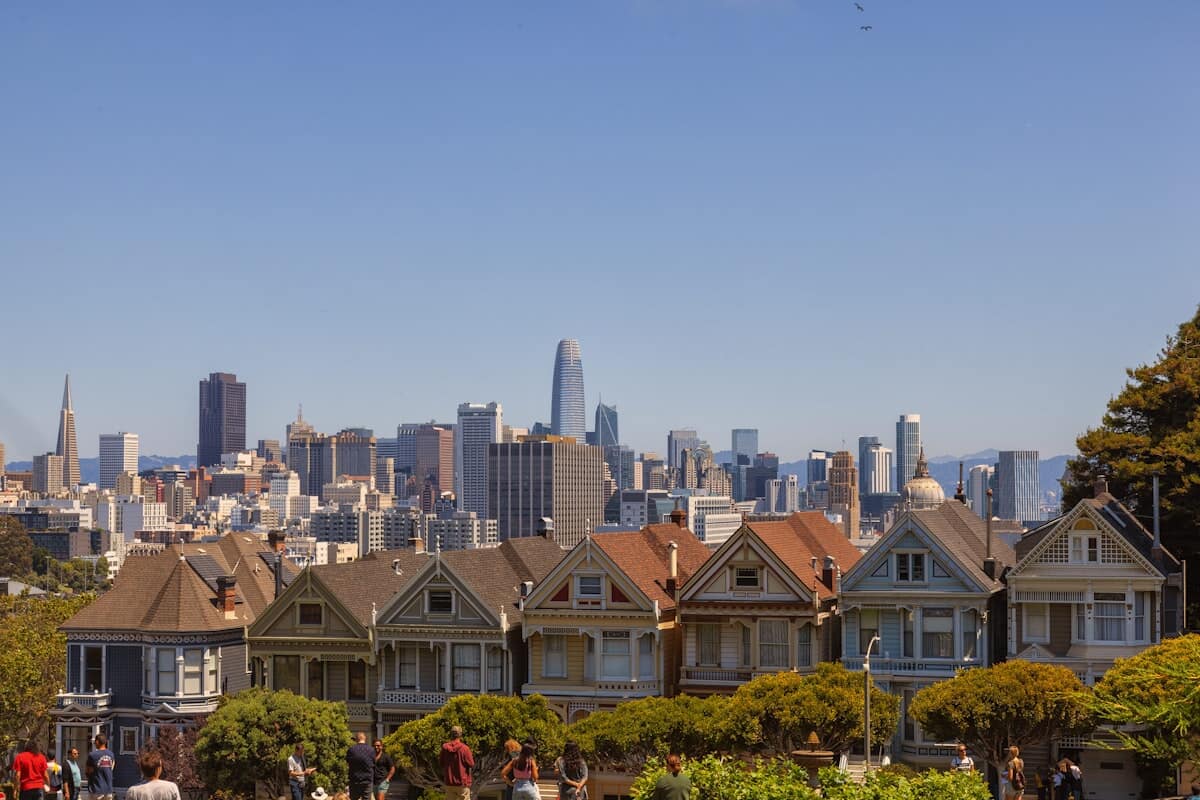
By the mid-1980s, the AIDS crisis was tearing through the Castro. Cannabis was being used by patients to manage chemotherapy nausea, appetite loss, and the side effects of early-generation HIV medications — and it was completely illegal. Dennis Peron, a Castro activist who had been an early advocate for cannabis since the 1970s, opened the San Francisco Cannabis Buyers Club in 1992 — the first medical-cannabis dispensary in the United States, on Market Street near 14th.
Peron and a small coalition then drafted what became Proposition 215. California voters passed Prop 215 in November 1996, legalizing medical cannabis under state law — the first state in the country to do so. Federal law still classified the entire industry as criminal, but California voters had created the legal opening that every state-level legalization since has followed.
If you're standing in front of any of our shops today, you're standing in the lineage that started in 1992 on Market Street. The compassion-club model that Peron built — local-owned, community-rooted, advocacy-aware — is how California Street Cannabis still operates. Our story page has more on how we got here.
Adult-use legalization: Prop 64 (2016) and the modern dispensary scene
Twenty years after Prop 215, Proposition 64 passed in November 2016 — California legalized adult-use cannabis for everyone 21 or older. Retail sales began January 2018. The state regulator structure went through several iterations and consolidated into the California Department of Cannabis Control in 2021. The DCC license framework is what every California dispensary, including ours, runs under.
Inside San Francisco, the new framework rebuilt the dispensary landscape almost from scratch. Compassion-club holdovers either transitioned into licensed operators or closed; new locally-owned shops opened across the neighborhoods. Our 1398 California St flagship in Nob Hill sits a couple of blocks from where the original cable-car-era neighborhoods touch Polk Gulch; our 235 Clement St shop in the Inner Richmond sits in one of the city's most walkable food corridors. Both are part of the post-Prop-64 inventory that is, statistically, the densest licensed cannabis market in the United States.
Today: where SF cannabis culture lives
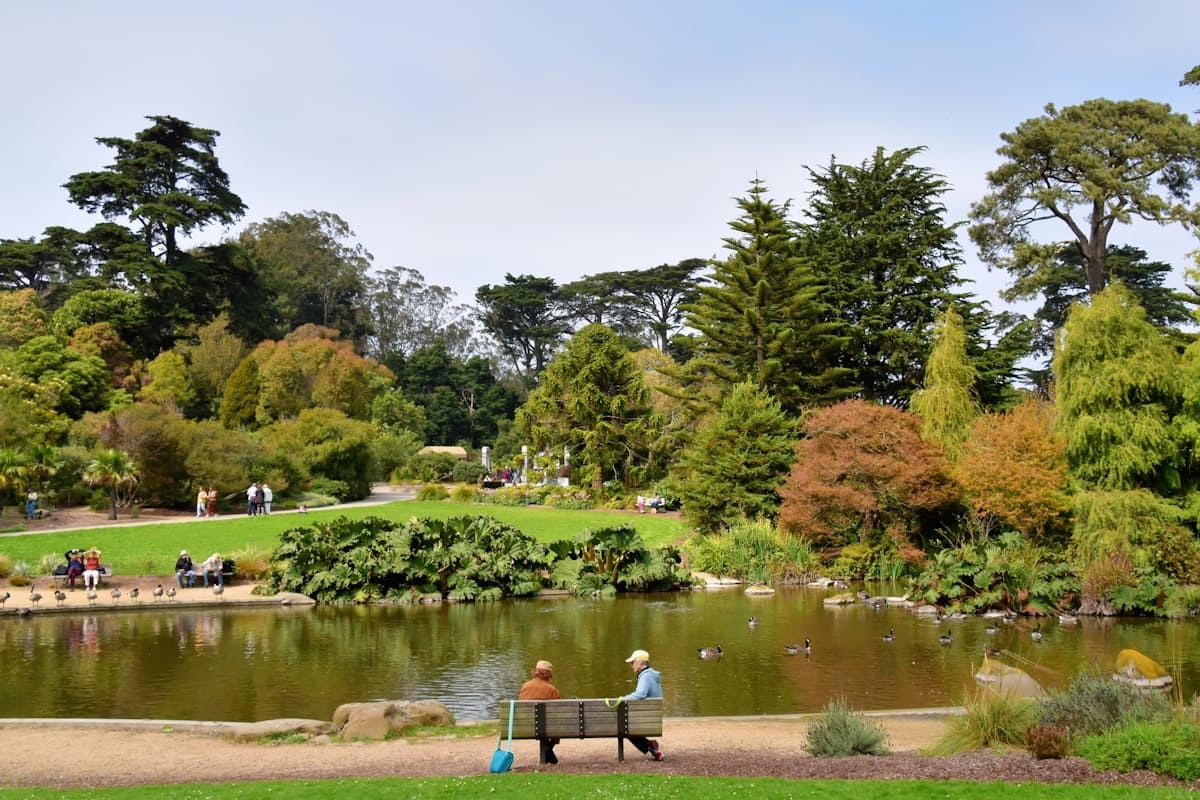
What's interesting about modern San Francisco cannabis history is how much of the original 1960s-era culture survived the legalization transition. The Mission still has the highest density of cannabis-aware art galleries in the country. The 4/20 tradition at Hippie Hill carries on (in a smaller, less-official form). Outside Lands, the city's biggest music festival, became the first US festival to legally sell cannabis on-site in 2018. Consumption lounges are slowly opening. Cannabis tourism — Dreamforce attendees, RSA Conference visitors, weekend leisure travelers — has become a real category, covered in our SF cannabis tourism guide (the Pillar 2 sister index to this one).
For more on how the dispensary side specifically evolved from compassion clubs to today's retail model, see our Evolution of SF Dispensary Culture deep dive. For a current edibles selection that wouldn't have been imaginable to the 1967 crowd, walk into any of our shops.
Frequently asked questions
When was cannabis first legal in San Francisco?
California legalized medical cannabis statewide via Prop 215 in 1996, with San Francisco's compassion-club movement leading the activism. Adult-use cannabis became legal in California in 2016 with Prop 64; retail sales began in 2018.
What was the first cannabis dispensary in San Francisco?
Dennis Peron's San Francisco Cannabis Buyers Club, opened in 1992 on Market Street, is widely recognized as the first medical-cannabis dispensary in the United States. It predated state-level legalization by four years and provided the activist foundation for Prop 215.
Why is San Francisco important in US cannabis history?
San Francisco is the city where modern legalization started. The Beat era seeded the cultural acceptance; the 1967 Summer of Love made it national; and the 1990s AIDS-era activism — led by Dennis Peron and rooted in the Castro and Mission — turned that culture into the legal framework that has spread to most US states.
Visit California Street Cannabis
If reading the city's cannabis history makes you want to walk into the current chapter of it, three options:
- 1398 California St in Nob Hill — the original flagship, on the California cable-car line, open 8:30 AM – 10 PM daily.
- 235 Clement St in the Inner Richmond — the westside shop, steps from the 38-Geary line and the Clement St food corridor, open 9 AM – 10 PM daily.
- 615 Sansome St in Jackson Square — the FiDi shop, closest to Moscone Center for conference visitors.
For the broader context — neighborhood culture, food pairings, outdoor lifestyle, art and music, local brands — see our SF cannabis culture guide, the Pillar 1 index for everything else. Welcome to the next chapter of San Francisco cannabis history.
Compliance
For use only by adults 21 years of age and older. Keep out of reach of children. Cannabis can impair concentration, coordination, and judgment. Do not operate a vehicle or machinery under the influence.
California Street Cannabis at Sansome | CA DCC License C10-0001117-LIC | 615 Sansome St, San Francisco, CA 94111. License status verifiable at the California Department of Cannabis Control.
Visit San Francisco maintains the city's official tourism information.

